
 خبری دربارهی کاردانو (ADA)
XLM, HBAR, ADA Networks Ask SEC to Lock In Commodity Rules
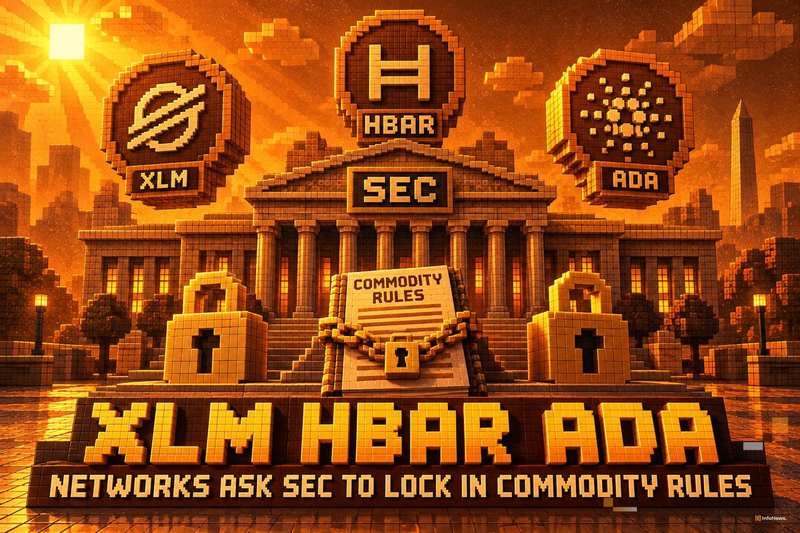
Networks behind three of the most prominent non-Bitcoin digital assets, Stellar (XLM), Hedera (HBAR), and Cardano (ADA), are pressing the U.S. Securities and Exchange Commission to establish durable commodity classification rules for digital assets, seeking the kind of regulatory predictability that Bitcoin has long held as the baseline standard for the broader industry. The push centers on a specific regulatory outcome: persuading the SEC to codify commodity treatment for certain digital assets rather than leaving classification to ad hoc enforcement decisions. For XLM, HBAR, and ADA, formal commodity rules would draw a clear line between their networks and assets that regulators might treat as unregistered securities. For related coverage, see Perpl Review 2026: Complete Beginner's Guide to the On-Chain Perps DEX. Bitcoin has occupied a distinct position in this debate since the CFTC and SEC both acknowledged, in separate proceedings, that Bitcoin functions as a commodity. That recognition underpins the regulatory legitimacy that spot Bitcoin ETF approvals later formalized. The networks behind XLM, HBAR, and ADA are seeking comparable clarity, arguing that continued ambiguity distorts compliance planning and limits institutional participation in their respective ecosystems. What to Know About the Push for SEC Commodity Rules Two points frame the core development. First, the organizations associated with XLM, HBAR, and ADA are making a coordinated call for the SEC to move beyond case-by-case enforcement and toward published, durable rules that define commodity treatment for digital assets. Second, the request is explicitly forward-looking: the goal is rules that persist across administrations and commission compositions, not informal guidance that can shift with personnel changes. Stellar, Hedera, and Cardano represent three distinct network architectures and governance structures, yet they share a common regulatory problem. Without commodity classification, each network's native asset remains in a gray zone where it could theoretically be treated as a security depending on how regulators characterize its issuance and distribution history. That ambiguity has direct consequences for exchanges, custodians, and institutional investors who must assess liability before touching any asset with unresolved status. The SEC has previously moved against several digital asset projects on securities grounds, making commodity classification the more favorable regulatory outcome for networks that operate public, decentralized infrastructure. Ripple's multi-year legal dispute with the agency over XRP illustrates precisely how prolonged regulatory uncertainty can affect an asset's availability on U.S. platforms, and Ripple itself has backed SEC rulemaking efforts aimed at ending case-by-case enforcement as a path to market stability. Why Clear Commodity Treatment Matters for XLM, HBAR and ADA Predictable classification affects three practical areas: compliance planning, market participation, and ecosystem confidence. On compliance, exchanges and custodians need a stable legal framework before committing to listing infrastructure. Repeated enforcement actions against specific assets create chilling effects that extend well beyond the targeted projects.
عنوان اصلی (انگلیسی): XLM, HBAR, ADA Networks Ask SEC to Lock In Commodity Rules
مشاهدهی خبر کامل در منبع ↗ بازگشت به کاردانواین خلاصه بهصورت خودکار از کوینمارکتکپ ترجمه شده و ممکن است خطای ماشینی داشته باشد؛ صرفاً جهت اطلاعرسانی است و توصیهی معاملاتی نیست.